Buy massimodutti.eu ?
We are moving the project
massimodutti.eu .
Are you interested in purchasing the domain
massimodutti.eu ?
domain@kv-gmbh.de · 0541-91531010
Buy massimodutti.eu ?
Where can I buy cardboard with the dimensions 1m x 1m?
You can buy cardboard with the dimensions 1m x 1m at various places such as office supply stores, craft stores, packaging supply stores, and online retailers. Look for specialty stores that sell large sheets of cardboard or contact local packaging companies to inquire about purchasing cardboard sheets in the specific size you need. Additionally, you can check with local hardware stores or home improvement centers as they may carry large sheets of cardboard for various purposes. **
Can the direct current cross-section be distributed across multiple cables?
Yes, direct current can be distributed across multiple cables. By connecting multiple cables in parallel, the total current can be divided among the cables, allowing for the distribution of the direct current across them. This method is commonly used in electrical systems to ensure that the current is evenly distributed and to prevent overloading of individual cables. **

Similar search terms for Cables-Direct-1m-CAT6A
Top-Angebote
Products related to Cables-Direct-1m-CAT6A:
-
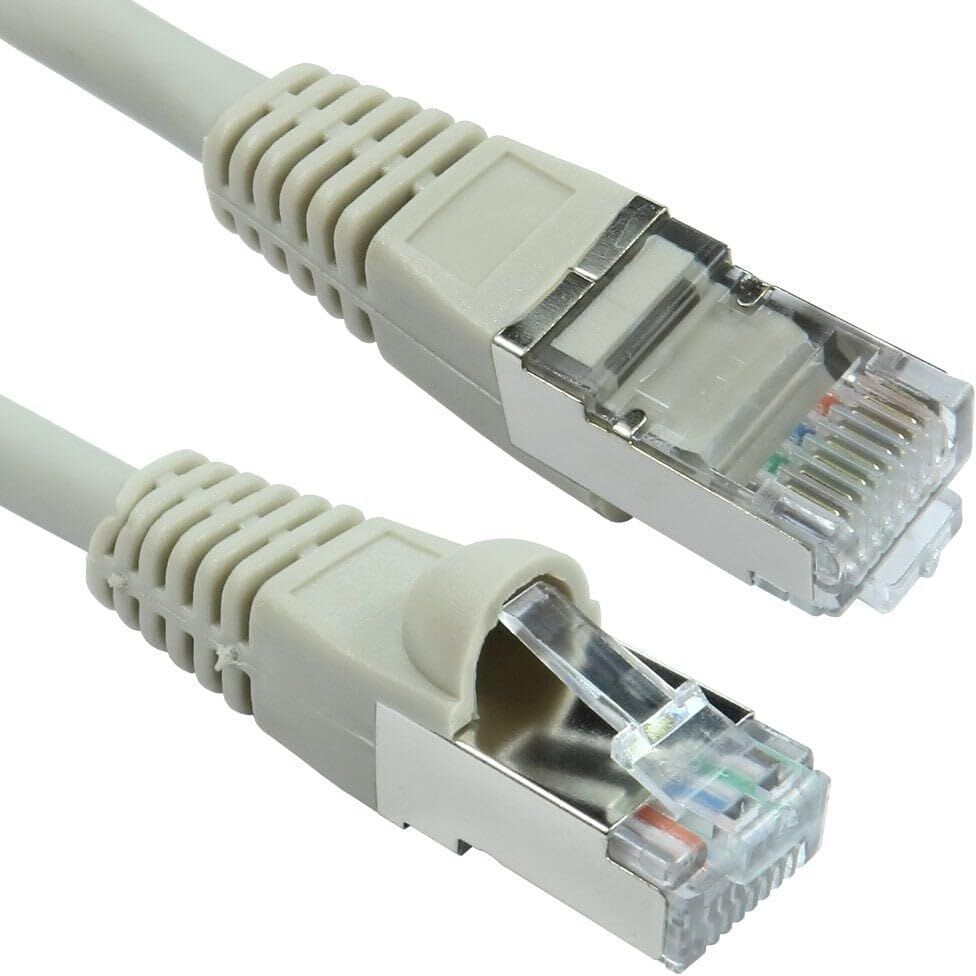
Cables Direct 1m Cat6a S/FTP Snagless Patch Cable - YellowCables Direct Cat6a network patch cable, 1m, yellow. S/FTP (S-STP) shielded with stranded conductors, RJ45 male to RJ45 male, moulded snagless boots, low-smoke halogen-free (LSOH) jacket.10,99 £*Shipping: 0,00 £Secure redirect to the provider



-
How do I determine the polarity of cables in direct current?
To determine the polarity of cables in direct current, you can use a multimeter set to the DC voltage setting. Connect the red probe to the positive terminal of the cable and the black probe to the negative terminal. If the multimeter shows a positive reading, then the red probe is connected to the positive terminal. If the reading is negative, then the red probe is connected to the negative terminal. This method helps you identify the polarity of the cables accurately. **
-
How do you change a Cat6a RJ45 connector?
To change a Cat6a RJ45 connector, you will first need to cut off the existing connector from the end of the cable. Then, strip back the outer jacket of the cable to expose the individual twisted pairs of wires. Next, arrange the wires according to the T568A or T568B wiring standard and insert them into the new RJ45 connector. Finally, use a crimping tool to secure the wires in place and ensure a proper connection. **
-
Do you need thicker cables for direct current than for alternating current?
No, you do not necessarily need thicker cables for direct current (DC) than for alternating current (AC). The current-carrying capacity of a cable is determined by factors such as the material, size, and insulation of the cable, as well as the voltage and current being carried. Both DC and AC have their own unique considerations when it comes to cable sizing, but the need for thicker cables is not inherently tied to the type of current being carried. It ultimately depends on the specific requirements of the electrical system and the application. **
-
Should I use Cat6a or Cat7 for network installation?
When deciding between Cat6a and Cat7 for network installation, it is important to consider your specific needs and budget. Cat6a is a more cost-effective option and can support data speeds of up to 10 Gbps over longer distances compared to Cat6. On the other hand, Cat7 offers even higher performance with data speeds of up to 10 Gbps over shorter distances and up to 40 Gbps over shorter distances. If you require higher speeds and have the budget for it, Cat7 may be the better choice. However, if you are looking for a more budget-friendly option that still offers good performance, Cat6a could be sufficient for your needs. **


How does the stress on cables differ between direct current and alternating current?
In direct current (DC) systems, the stress on cables is relatively constant because the current flows in one direction continuously. This results in a steady and predictable stress level on the cables. On the other hand, in alternating current (AC) systems, the stress on cables fluctuates as the current changes direction periodically. This can lead to higher stress levels on the cables, especially during peak currents, which may require cables to be designed to withstand these fluctuations. **
Why does the voltage tester light up on both cables in direct current?
The voltage tester lights up on both cables in direct current because in a direct current circuit, the flow of electric charge is unidirectional. This means that the current flows from the positive terminal to the negative terminal of the power source. When the voltage tester is connected to the cables, it detects the presence of electric potential difference between the two points, causing the light to illuminate on both cables. This indicates that there is a voltage present in the circuit, regardless of the direction of the current flow. **
Top-Angebote
Products related to Cables-Direct-1m-CAT6A:
-
Cables Direct 1m CAT6A Patch Cable (Pink)Cat6A Ethernet cable, often called Category 6A, supports 10 Gigabit Ethernet. It offers up to 600MHz performance, suitable for 10BASE-T, 100BASE-TX, 1000BASE-T, and 10GBASE-T. It's backwards compatible with Cat6, Cat5e, and Cat5.10,99 £*Shipping: 0,00 £Secure redirect to the provider
-
Cables Direct 1m Cat6a S/FTP Snagless Patch Cable - YellowCables Direct Cat6a network patch cable, 1m, yellow. S/FTP (S-STP) shielded with stranded conductors, RJ45 male to RJ45 male, moulded snagless boots, low-smoke halogen-free (LSOH) jacket.10,99 £*Shipping: 0,00 £Secure redirect to the provider
-
Where can I buy cardboard with the dimensions 1m x 1m?
You can buy cardboard with the dimensions 1m x 1m at various places such as office supply stores, craft stores, packaging supply stores, and online retailers. Look for specialty stores that sell large sheets of cardboard or contact local packaging companies to inquire about purchasing cardboard sheets in the specific size you need. Additionally, you can check with local hardware stores or home improvement centers as they may carry large sheets of cardboard for various purposes. **
-
Can the direct current cross-section be distributed across multiple cables?
Yes, direct current can be distributed across multiple cables. By connecting multiple cables in parallel, the total current can be divided among the cables, allowing for the distribution of the direct current across them. This method is commonly used in electrical systems to ensure that the current is evenly distributed and to prevent overloading of individual cables. **
-
How do I determine the polarity of cables in direct current?
To determine the polarity of cables in direct current, you can use a multimeter set to the DC voltage setting. Connect the red probe to the positive terminal of the cable and the black probe to the negative terminal. If the multimeter shows a positive reading, then the red probe is connected to the positive terminal. If the reading is negative, then the red probe is connected to the negative terminal. This method helps you identify the polarity of the cables accurately. **
-
How do you change a Cat6a RJ45 connector?
To change a Cat6a RJ45 connector, you will first need to cut off the existing connector from the end of the cable. Then, strip back the outer jacket of the cable to expose the individual twisted pairs of wires. Next, arrange the wires according to the T568A or T568B wiring standard and insert them into the new RJ45 connector. Finally, use a crimping tool to secure the wires in place and ensure a proper connection. **
Similar search terms for Cables-Direct-1m-CAT6A
-
Cables Direct 1.5m CAT6A Patch Cable (Orange)Cat6A Ethernet cable, often called Category 6A, is designed for 10 Gigabit Ethernet. It offers up to 600MHz performance and supports 10BASE-T, 100BASE-TX, 1000BASE-T, and 10GBASE-T standards. It's backwards compatible with Cat6, Cat5e, and Cat5.10,99 £*Shipping: 0,00 £Secure redirect to the provider
-
Do you need thicker cables for direct current than for alternating current?
No, you do not necessarily need thicker cables for direct current (DC) than for alternating current (AC). The current-carrying capacity of a cable is determined by factors such as the material, size, and insulation of the cable, as well as the voltage and current being carried. Both DC and AC have their own unique considerations when it comes to cable sizing, but the need for thicker cables is not inherently tied to the type of current being carried. It ultimately depends on the specific requirements of the electrical system and the application. **
-
Should I use Cat6a or Cat7 for network installation?
When deciding between Cat6a and Cat7 for network installation, it is important to consider your specific needs and budget. Cat6a is a more cost-effective option and can support data speeds of up to 10 Gbps over longer distances compared to Cat6. On the other hand, Cat7 offers even higher performance with data speeds of up to 10 Gbps over shorter distances and up to 40 Gbps over shorter distances. If you require higher speeds and have the budget for it, Cat7 may be the better choice. However, if you are looking for a more budget-friendly option that still offers good performance, Cat6a could be sufficient for your needs. **
-
How does the stress on cables differ between direct current and alternating current?
In direct current (DC) systems, the stress on cables is relatively constant because the current flows in one direction continuously. This results in a steady and predictable stress level on the cables. On the other hand, in alternating current (AC) systems, the stress on cables fluctuates as the current changes direction periodically. This can lead to higher stress levels on the cables, especially during peak currents, which may require cables to be designed to withstand these fluctuations. **
-
Why does the voltage tester light up on both cables in direct current?
The voltage tester lights up on both cables in direct current because in a direct current circuit, the flow of electric charge is unidirectional. This means that the current flows from the positive terminal to the negative terminal of the power source. When the voltage tester is connected to the cables, it detects the presence of electric potential difference between the two points, causing the light to illuminate on both cables. This indicates that there is a voltage present in the circuit, regardless of the direction of the current flow. **
* All prices are inclusive of VAT and, if applicable, plus shipping costs. The offer information is based on the details provided by the respective shop and is updated through automated processes. Real-time updates do not occur, so deviations can occur in individual cases. ** Note: Parts of this content were created by AI.