Buy massimodutti.eu ?
We are moving the project
massimodutti.eu .
Are you interested in purchasing the domain
massimodutti.eu ?
domain@kv-gmbh.de · 0541-91531010
Buy massimodutti.eu ?
How do you lay polygonal tiles?
To lay polygonal tiles, start by preparing the surface by ensuring it is clean, flat, and dry. Then, plan the layout by dry-fitting the tiles and making any necessary cuts. Next, apply a thin layer of mortar or adhesive to the surface and carefully place the tiles, ensuring they are evenly spaced and level. Use spacers to maintain consistent grout lines and allow the mortar to set before grouting the tiles. Finally, clean off any excess grout and seal the tiles to protect them from stains and moisture. **
How are polygonal tiles laid on clay?
Polygonal tiles are laid on clay by first preparing the surface by cleaning and leveling it. A layer of adhesive is then applied to the clay surface, and the tiles are carefully placed on top, ensuring they are evenly spaced and aligned. Once all the tiles are in place, grout is applied to fill the gaps between the tiles and secure them in position. Finally, the grout is cleaned off the surface of the tiles to reveal the finished look. **
Similar search terms for Polygonal
Top-Angebote
Products related to Polygonal:
-
Uplifted Finds Polygonal Silicone Bath Brush Exfoliating Body Scrubber And Massage Tool blackUpgrade your bathing routine with this polygonal silicone bath brush designed for deep exfoliation and gentle massage. Its flexible silicone bristles help remove dead skin, improve circulation, and create a refreshing clean with every use. The wide...46,97 $*Shipping: 0,00 $Secure redirect to the provider
-
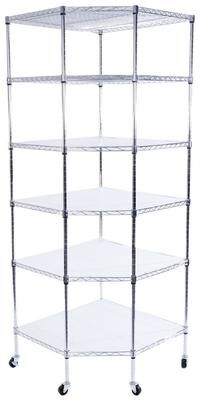
fastbuy "6-Layer Chrome Plated Polygonal Corner Shelf with 2"" PP Wheels Silver""Introductions: The 6-Layer Chrome Plated Polygonal Corner Shelf with 2"" PP Wheels is designed to fit nicely into wall corners, perfect for organizing or displaying accessories, makeup products, tools and more."130,65 $*Shipping: 0,00 $Secure redirect to the provider



-
How can you lay polygonal tiles over old tiles?
To lay polygonal tiles over old tiles, you first need to ensure that the existing tiles are clean, dry, and in good condition. Next, apply a bonding agent or primer to the old tiles to help the new tiles adhere properly. Then, use a thin-set mortar to lay the new polygonal tiles over the old tiles, making sure to press them firmly into place. Finally, grout the tiles once the mortar has set to complete the installation. **
-
What strength should polygonal slabs have for a terrace?
Polygonal slabs used for a terrace should have a strength that can withstand the weight of foot traffic, furniture, and other potential loads. A minimum strength of 3000 psi (pounds per square inch) is typically recommended for outdoor terraces to ensure durability and resistance to cracking. Additionally, the slabs should have good resistance to weathering and be able to withstand freeze-thaw cycles to maintain their integrity over time. **
-
How can the crystalline polygonal structure of frozen water be explained?
The crystalline polygonal structure of frozen water can be explained by the arrangement of water molecules in a hexagonal lattice when they freeze. As water cools, the molecules slow down and come closer together, forming a regular pattern due to hydrogen bonding. This arrangement results in the formation of hexagonal ice crystals, which give snowflakes their characteristic six-sided symmetry. The angles between the bonds in the water molecule and the hydrogen bonds between molecules contribute to the polygonal structure of frozen water. **
-
What is a polygonal line and how do I represent it?
A polygonal line is a series of connected line segments that form a closed shape. It is also known as a polyline. To represent a polygonal line, you can use a set of coordinates that define the vertices of the line segments. Each pair of coordinates represents a point in the plane, and the line segments are formed by connecting these points in sequence. This representation allows for easy manipulation and calculation of properties such as length and area. **

How do you lay polygonal tiles on top of existing tiles?
To lay polygonal tiles on top of existing tiles, you will first need to ensure that the existing tiles are clean, level, and in good condition. Then, you can apply a layer of thin-set mortar over the existing tiles using a notched trowel. Next, carefully place the polygonal tiles on top of the thin-set mortar, making sure they are evenly spaced and level. Once the tiles are in place, use a rubber mallet to gently tap them into position. Finally, allow the mortar to dry completely before grouting the tiles. **
Can you permanently install polygonal slabs with grass joints in a thin gravel bed?
Yes, it is possible to permanently install polygonal slabs with grass joints in a thin gravel bed. The key to a successful installation is to ensure that the gravel bed is properly compacted and leveled to provide a stable base for the slabs. Additionally, using a geotextile fabric underneath the gravel can help prevent weed growth and stabilize the base. Properly maintaining the grass joints by regular mowing and weeding will help ensure the longevity of the installation. **
Top-Angebote
Products related to Polygonal:
-
karlinc 6-Layer Chrome Plated Polygonal Corner Shelf with Wheels SilverIntroductions: The 6-layer chrome-plated polygonal corner stand is equipped with 2-inch PP wheels, which can be well embedded in the corner of the wall, which is very suitable for organizing or displaying accessories, cosmetics, tools, etc.137,49 $*Shipping: 0,00 $Secure redirect to the provider
-
Uplifted Finds Polygonal Silicone Bath Brush Exfoliating Body Scrubber And Massage Tool blackUpgrade your bathing routine with this polygonal silicone bath brush designed for deep exfoliation and gentle massage. Its flexible silicone bristles help remove dead skin, improve circulation, and create a refreshing clean with every use. The wide...46,97 $*Shipping: 0,00 $Secure redirect to the provider
-
fastbuy "6-Layer Chrome Plated Polygonal Corner Shelf with 2"" PP Wheels Silver""Introductions: The 6-Layer Chrome Plated Polygonal Corner Shelf with 2"" PP Wheels is designed to fit nicely into wall corners, perfect for organizing or displaying accessories, makeup products, tools and more."130,65 $*Shipping: 0,00 $Secure redirect to the provider
-
How do you lay polygonal tiles?
To lay polygonal tiles, start by preparing the surface by ensuring it is clean, flat, and dry. Then, plan the layout by dry-fitting the tiles and making any necessary cuts. Next, apply a thin layer of mortar or adhesive to the surface and carefully place the tiles, ensuring they are evenly spaced and level. Use spacers to maintain consistent grout lines and allow the mortar to set before grouting the tiles. Finally, clean off any excess grout and seal the tiles to protect them from stains and moisture. **
-
How are polygonal tiles laid on clay?
Polygonal tiles are laid on clay by first preparing the surface by cleaning and leveling it. A layer of adhesive is then applied to the clay surface, and the tiles are carefully placed on top, ensuring they are evenly spaced and aligned. Once all the tiles are in place, grout is applied to fill the gaps between the tiles and secure them in position. Finally, the grout is cleaned off the surface of the tiles to reveal the finished look. **
-
How can you lay polygonal tiles over old tiles?
To lay polygonal tiles over old tiles, you first need to ensure that the existing tiles are clean, dry, and in good condition. Next, apply a bonding agent or primer to the old tiles to help the new tiles adhere properly. Then, use a thin-set mortar to lay the new polygonal tiles over the old tiles, making sure to press them firmly into place. Finally, grout the tiles once the mortar has set to complete the installation. **
-
What strength should polygonal slabs have for a terrace?
Polygonal slabs used for a terrace should have a strength that can withstand the weight of foot traffic, furniture, and other potential loads. A minimum strength of 3000 psi (pounds per square inch) is typically recommended for outdoor terraces to ensure durability and resistance to cracking. Additionally, the slabs should have good resistance to weathering and be able to withstand freeze-thaw cycles to maintain their integrity over time. **
Similar search terms for Polygonal
-
How can the crystalline polygonal structure of frozen water be explained?
The crystalline polygonal structure of frozen water can be explained by the arrangement of water molecules in a hexagonal lattice when they freeze. As water cools, the molecules slow down and come closer together, forming a regular pattern due to hydrogen bonding. This arrangement results in the formation of hexagonal ice crystals, which give snowflakes their characteristic six-sided symmetry. The angles between the bonds in the water molecule and the hydrogen bonds between molecules contribute to the polygonal structure of frozen water. **
-
What is a polygonal line and how do I represent it?
A polygonal line is a series of connected line segments that form a closed shape. It is also known as a polyline. To represent a polygonal line, you can use a set of coordinates that define the vertices of the line segments. Each pair of coordinates represents a point in the plane, and the line segments are formed by connecting these points in sequence. This representation allows for easy manipulation and calculation of properties such as length and area. **
-
How do you lay polygonal tiles on top of existing tiles?
To lay polygonal tiles on top of existing tiles, you will first need to ensure that the existing tiles are clean, level, and in good condition. Then, you can apply a layer of thin-set mortar over the existing tiles using a notched trowel. Next, carefully place the polygonal tiles on top of the thin-set mortar, making sure they are evenly spaced and level. Once the tiles are in place, use a rubber mallet to gently tap them into position. Finally, allow the mortar to dry completely before grouting the tiles. **
-
Can you permanently install polygonal slabs with grass joints in a thin gravel bed?
Yes, it is possible to permanently install polygonal slabs with grass joints in a thin gravel bed. The key to a successful installation is to ensure that the gravel bed is properly compacted and leveled to provide a stable base for the slabs. Additionally, using a geotextile fabric underneath the gravel can help prevent weed growth and stabilize the base. Properly maintaining the grass joints by regular mowing and weeding will help ensure the longevity of the installation. **
* All prices are inclusive of VAT and, if applicable, plus shipping costs. The offer information is based on the details provided by the respective shop and is updated through automated processes. Real-time updates do not occur, so deviations can occur in individual cases. ** Note: Parts of this content were created by AI.